
Eat - Love- GET PREGNANT! Discover the secrets!

Green Fertility: A Breath of Fresh Air for Couples TTC!

A Baby At Last! Discover the latest tests, treatments and natural ways to get pregnant fast!

Up to 70% Savings on Top Brands

Fertility Jewelry!

Fertility Jewelry!
Click the photo to discover the natural gemstones that legend says can influence fertility & help you get pregnant faster!

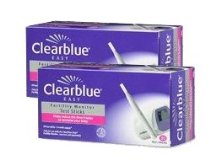
Fertility Monitors ...& So Much More!

Fertility Monitors ...& So Much More!
Get all your fertility -pregnancy supplies - and save $$$$! Just click the photo!

Cleanwell

Designer Jewelry - Outlet Prices !

Designer Jewelry - Outlet Prices !
Go on ....treat yourself! You deserve it! ( And you won't believe the prices! :)Just click the picture to visit CountryDutchess.com - your source for affordable gems and jewels!
Up to 80% off brand name skincare cosmetic

Wednesday, June 2, 2010

Antibacterial Soap & Your Fertility:What You MUST Know!

It was recently announced that the FDA and the EPA will be taking a closer look at health dangers - including infertility - linked to chemicals found in hand sanitizers, anti bacterial soaps and more! Getting Pregnant looks at the latest findings -plus a cache of powerful all natural antibacterial products that protect without fear!

By Colette Bouchez

If you're like most folks you’ve probably got at least one bottle of hand sanitizer in your handbag - and maybe a bathroom or kitchen sink filled with antibacterial soaps and detergents. Indeed, between the proliferation of new germs that seem to be swarming our earth, and the tainted foods that keep landing on our grocery store shelves it’s hard not to give in to the proliferation of new ways to stay germ free.

But if you’re a couple trying to conceive you need to pay special attention to some new concerns about one of the most common anti-bacterial ingredients around. It’s called triclosan - and it recently became the focus of a new FDA and Environmental Protection Agency ( EPA) review for safety concerns.

What kind of concerns?

According to the Environmental Working Group’s database of hazardous chemicals, studies on triclosan found links to cancer, allergies, immuno- toxicities, irritation of the skin, eyes and lungs.

But what’s most important for those of you trying to get pregnant is that triclosan is also connected to a host of developmental and reproductive toxicity issues - mainly because it is believed to be a "hormone disruptor” . These are chemicals that, once absorbed by the body begin to act much like a real hormone - including binding to hormone receptors in our body. This in turn "tricks" our system into believing the real hormone is present, and in doing so initiate a number of “false signals” that in turn cause other hormonal and chemical activities to occur.

* In one study recently conducted by researchers at the University of California at Davis, triclosan -
and it’s chemical cousin triclocarban - were found to disrupt reproductive hormone activity and interfere with a type of cell signaling that occurs in the brain and other cells.

* In another study published in the journal Endocrinology, Dr. Bill Lasley a professor of Obstetrics and Gynecology concluded that unlike other classic endocrine disruptors which bind to cell receptors, triclocarban actually impacts that way our natural sex hormones act. This in turn appears to depress the natural production of both estrogen and androgen ( the male sex hormone) and in the process disrupt our fertility in myriad ways.

Indeed, when a hormone disruptor messes with your reproductive hormones, it can throw your entire reproductive biochemistry into a tailspin.

* Women can experience changes in the menstrual cycle and
ovulation that are dramatic enough to delay or even prevent
conception.

* Some exposures are strong enough to cause infertility or even
miscarriage - sometimes occurring at such an early stage you
might not even know you are pregnant.

* When men are exposed, sperm count may be affected , along
with sperm motility and maturity.

In fact, researching just a little deeper we find that triclosan is actually a pesticide closely related to dioxin - a known chemical health threat, endocrine disruptor, and carcinogen. According to the FDA, triclosan “could be” and is “suspected to be “ contaminated with dioxins - a chemical known to have devastating effects on fertility.


Buyer Beware: Is Triclosan Hiding In Your Home?

While the majority of the triclosan you see is found in products like hand sanitizers and antibacterial soaps, you may be surprised to discover how many products actually contain these chemicals - and don’t include it on the label.

You can, in fact, find triclosan in not only many cosmetics, but also in soaps, dishwashing detergents, toothpastes, shampoos, skin creams and moisturizers, shaving gels, kids toys, workout clothes, and socks, to name a few! ( See full product list here) . And because of this, it’s also found its way into our environment.

According to Rep. Edward J. Markey (D-Mass.), who has been pushing federal regulators to take stronger action to restrict the use of triclosan and other chemicals, “ It’s in our drinking water, it's in our rivers and as a result, it's in our bodies. . . . I don't think a lot of additional data has to be collected in order to make the simple decisions about children's toys and soaps that people use. It clearly is something that creates a danger,” he recently told The Washington Post.

Indeed, the exposure to triclosan is now so great that the US Centers for Disease Control and Prevention report that residues are showing up in the urine of 75% of Americans.

That said, Brian Sansoni of the Soap and Detergent Association,which represents the 30 billion US cleaning products industry recently said in an interview that concerns about triclosan are unfounded.

In a quote to the Washington Post he added " These products and ingredients have been reviewed, regulated and researched for decades," and he added that " science strongly supports the safety and efficacy of these products." He also said that the time was not only right for these products, but that they were necessary to protect us in a time of increased threats from disease.

Kinder, Gentler, Anti Bacterial Protection: It's Here Now!

Currently, The European Union classifies triclosan as dangerous to the environment while both the Canadian and Japanese governments have banned its use in cosmetics. In the United States, both the FDA and the EPA have agreed to take a second, much harder look at triclosan, including whether or not it could be causing reproductive harm.

But as anyone who has ever waited for a government report can tell you, answers are not likely to affect what’s on supermarket shelves any time soon.


So what’s a couple trying to conceive to do in the meantime ?

First, remember that studies also show that vigorous hand washing for 20 seconds or more with regular old soap and hot water will go a long way in wiping out most germs destined to do us in.


But if you’re looking for an extra edge of protection,
there are kinder, safer natural antibacterial products
available! Among the best choices are products
manufactured by Cleanwell - an entire company
that is devote to killing germs on contact,
with no harmful chemicals!

To that Cleanwell products rely on a combination of the natural herbal antibacterial known as thyme, in conjunction with a series of essential oils to to provide the same (or better) protection as triclosan, without the inherent dangers.


Moreover, these same oils have been shown in independentclaboratory studies to kill the “ bad” bacteria ( including MRSA, salmonella and E-coli) without destroying the “good” bacteria on skin that is designed to keep us healthy.

According to Dr. Larry Weiss, the medical director of CleanWell, “ The good bacteria on our hands and skin helps us stay healthy by protecting against bad germs we’re exposed to through contact; that’s why it’s important to choose soaps and hand sanitizers that help your body maintain a healthy balance of bacteria.”

But Cleanwell is not alone on the store shelves. Companies such as DEFENSE manufacture an all natural antibacterial soap that uses a combination of tea tree oil and oil of Eucalyptus to fight bacteria associated with MRSA, ringworm, staph, impetigo, herpes, jock itch and athletes foot.

California Baby offers a natural antibacterial wash for both children and adults that relies on lemon, tea tree oil and ravensara for natural antibacterial properties along with a recommendation to “vigorously “ wash your hands for 20 seconds or more for the best protection.

And that's just the beginning of what you will find . Indeed, if take some time to visit stores featuring natural or organic products you’ll find a nice selection of natural products that can help protect you from germs without compromising your fertility. Most companies also make their products available online so a little Googling can’t hurt either!

While it’s clear we can’t completely avoid triclosan and other chemicals that can impact our fertility, the more we can reduce our exposures through better product choices, the less likely we are to experience problems.


For more information on how to find the hidden triclosan in your personal care and home products click here. For the latest advice and information on getting pregnant fast be sure to visit GettingPregnantNow.org - The Trusted Fertility Source For Over 20 Years!


Copyright by ElleMedia 201o- All Rights Reserved.In addition to US Copyright, the text of this FERTILITY BLOG is licensed under a Creative Commons Attribution 3.0 License. All Formatting and style elements of this page are not available under this license and Colette Bouchez retains all rights in those elements.

Tuesday, April 27, 2010

"Not Yet Ready For Prime Time" Sperm

Research sheds new light on why some men have fertility problems - and what can be done to turn things around!

By Colette Bouchez

While a great deal of the difficulty in getting pregnant is frequently focused on women, it’s important to remember that up to 50% of all fertility problems are male related.

Now, two new studies offer important pieces in the male fertility puzzle, helping to sort out the reason why some couples may be having problems conceiving. Moreover, both new studies point to a defect in a protein involved in helping sperm to mature and grow as the key culprit.

“Our study shows for the first time to our knowledge that [this protein]…. is associated with a strong impact on fertility outcome,” says lead study author Dr. Jessica Escoffier of the Grenoble Institute of Neuroscience, one of two locations where the independent research was conducted.

Indeed, one of the major causes of male infertility is related to sperm which fail to fully develop. When this occurs, two possible problems result. The first is a decrease in sperm motility – meaning that the “little guys” either can’t swim quickly enough to reach the egg in time, or that they lose their direction when they try to swim.

But even if his sperm does successfully reach it’s destination, without proper maturation, entry into the shell of the egg is not possible - and that means fertilization will not take place.

While there have been many theories as to what can keep both these problems from occurring, today two new studies have independently shown that a defect in proteins crucial for sperm development may be at the root of the problem.

In the one study, conducted at The Toyko Metropolitan Institute of Medical Science, a group of Japanese researchers zeroed in on a protein which is expressed in the area of the testes where sperm is made . Test subjects who were lacking in this protein ejaculated sperm that were considered “immature” – or not yet ready to fertilize an egg. Both motility and the ability to penetrate the egg appeared to be impacted.

In the study, conducted at the Grenoble Institute of Neurosicence in France, Escoffier and her colleagues found that this same protein played an essential role in the health of the “acrosome” - a portion of the head of each sperm that produces enzymes which help break down an egg’s shell , allowing entry and subsequently, fertilization to occur. In subjects who were lacking this protein, sperm were not able to fertilize an egg in the test tube – the process known as IVF.

Although the research was done in mice and not humans, researchers say they are confidant that the results are applicable and may represent a whole new target for both male fertility medications which target and excite this protein, as well as male contraceptives which help dampen the activity of the protein.

Both studies were published today in the Journal of Clinical Investigation.

In the meantime, remember that many advances in the treatment of male fertility can help nearly all men to father a child. In the procedure known as ICSI, for example, individual sperm are extracted from a man's testicles and placed directly into the egg, thereby reducing a great many of the obstacles to conception.

Also remember that many men can dramatically improve the health of their sperm via simple changes in diet and lifestyle. Good nutrition, along with avoiding certain foods, can be the deciding factor that helps some men go from infertile to fertile without any medical treatments.
To learn more about the foods that can help male fertility click here.

Or visit www.GettingPregnantNow.org to learn more about the latest natural and medical treatments for helping you get pregnant fast!


Copyright by ElleMedia/ Colette Bouchez 2010 - All Rights Reserved.In addition to US Copyright, the text of this FERTILITY BLOG is licensed under a Creative Commons Attribution 3.0 License. All Formatting and style elements of this page are not available under this license and Colette Bouchez retains all rights in those elements
.

Thursday, April 1, 2010

Birthing A Mother: New Book Sheds Light On Surrogacy

Are you infertile? Are you having problems getting pregnant? Find out if the surrogacy option is right for you?
(Pictured: Sarah Jessica Parker & Matthew Broderick, son, and new twins delivered by a surrogate.)


By Dr. Niels H. Lauersen

Medical Director, GettingPregnantNow.org

Are you having problems getting pregnant? Have you been told that you cannot carry a baby to term? Have you thought about the possibility of another woman carrying your child.

If so, you’re among a growing number of women who may benefit from the power of surrogacy, the fertility treatment that allows one woman to carry the baby for another. And for many it can be a life-changing experience.

Indeed, most recently the concept of surrogacy made worldwide headlines when actress Sarah Jessica Parker and husband actor Matthew Broderick conceived twins using a surrogate mother (pictured above).

And, in fact, for those women who, for any variety of reasons cannot or chose not to carry a baby in their own womb, it offers the chance for genetic parenting that otherwise might not be possible. For the surrogate it can be an opportunity to give life – and more importantly give a child – to a woman or man who might otherwise never know the experience of genetic parenthood.

And now, a brand new book explores that very relationship with groundbreaking new research on the surrogacy experience. Titled Birthing a Mother: The Surrogate Body and the Pregnant Self the book is based on a study conducted by cultural anthropologist Elly Teman, a Research Fellow at the Penn Center for the Integration of Genetic Healthcare Technologies at the University of Pennsylvania. Offering up a unique perspective on the surrogacy experience, it is a book that I believe is likely to help every woman considering this option to know and understand the emotional and even the physical process, better.

What Does Surrogacy Involve?

There are many different types of surrogate pregnancies – some which involve the use of the intended mother’s eggs and some with donor eggs or the eggs of the surrogate. Sperm can come from the baby’s intended father or from a donor. Surrogates can become pregnancy using traditional fertility treatments such as IVF, or via artificial insemination.

In terms of choosing a surrogate, it can be someone the couple knows – such as the intended mother’s sister, cousin, or even her own mother. Other times it’s may be a complete stranger – someone they meet through their doctor or through one of a growing number of surrogate agencies.

But irregardless of how the two women meet, the relationship between birth mother and intended mother is a complex one, filled with emotions on every level.

And in fact, the new book Birthing a Mother probes the intimate experience of being a surrogate while also exploring how surrogates – and their intended mothers – walk a fine line of emotional negotiation that can be difficult, and yet rewarding, for both.

The book also dispels many common myths about the surrogacy experience, including the one I have heard most often from my patients – the fear that the surrogate will not relinquish the baby when the time comes. While certainly this has been known to happen, by and large, surrogates are well adjusted women who enter into the experience with the mindset that they doing this for someone else’s benefit – and rarely is it a problem when birthing day arrives.

In fact, I have seen some of the most incredible, lasting bonds develop between birth mother and biological mother – which is something Teman’s study also found.

Her research, which looked at Jewish Israeli women, traced the process by which surrogates psychologically and emotionally disengage from the fetus they carry. In that work she too found that most of these women develop a profound and often lasting emotional bond with each one – and one that in the end, I believe can be beneficial to both women as well as to the child.

Early reviews of Birthing a Mother touch on Dr. Teman’s skill as a writer and on the groundbreaking nature of her work , while the book itself offers a glimpse of a world that most will never see or experience.

If You Are Considering Surrogacy

If you are considering surrogacy to make your own dreams of motherhood come true, I urge you to read this book; if you are woman who has considered being a surrogate, this book will guide you to make the right choice. If you are a woman grappling with infertility – particularly if you are over age 40 – then this book can open your eyes to another option you may have never considered.

Do be aware, however, that surrogacy is not sanctioned in every state. In some states in the US surrogacy is outlawed, in other states it is allowed only among women who are blood relatives. For more information and a state-by-state law guide visit: AllAboutSurrogacy.com

To learn more about the surrogacy experience, including costs and medical information, visiting GettingPregnantNow.org

Copyright by ElleMedia2010 - All Rights Reserved. In addition to US Copyright, the text of this FERTILITY BLOG is licensed under a Creative Commons Attribution 3.0 License. All Formatting and style elements of this page are not available under this license and Colette Bouchez retains all rights in those elements.
Disclosure:Purchasing a book directly from this site may benefit the owners of this blog.