
Eat - Love- GET PREGNANT! Discover the secrets!

Green Fertility: A Breath of Fresh Air for Couples TTC!

A Baby At Last! Discover the latest tests, treatments and natural ways to get pregnant fast!

Up to 70% Savings on Top Brands

Fertility Jewelry!

Fertility Jewelry!
Click the photo to discover the natural gemstones that legend says can influence fertility & help you get pregnant faster!

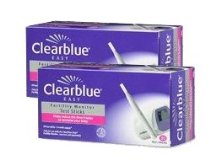
Fertility Monitors ...& So Much More!

Fertility Monitors ...& So Much More!
Get all your fertility -pregnancy supplies - and save $$$$! Just click the photo!

Cleanwell

Designer Jewelry - Outlet Prices !

Designer Jewelry - Outlet Prices !
Go on ....treat yourself! You deserve it! ( And you won't believe the prices! :)Just click the picture to visit CountryDutchess.com - your source for affordable gems and jewels!
Up to 80% off brand name skincare cosmetic
Showing posts with label enhance IVF success. Show all posts

Monday, January 3, 2011

Med Study: Increase IVF Success and Reduce Miscarriage With Natural Treatment

Fotolia_13551833_XSA new study found that a simple natural oil emulsion could be the key to a more successful IVF. Here’s what you need to know… By Colette Bouchez

If a group of British researchers are right, improving your odds of a successful IVF – and reducing your risk of miscarriage - could be as easy as using a simple, inexpensive soy-based oil treatment one week prior to when your fertility procedure takes place.
That’s the conclusion of some new research being presented later this week at the British Fertility Society Meeting in Dublin , Ireland on January 6th.
Here researchers from Care Fertility, an IVF clinic in Nottingham, England will present evidence that an intravenous treatment using a prescription-only soy-based oil known as Intralipid prior to an IVF procedure , dramatically increases pregnancy success rates while reducing the risk of miscarriage.
Dr. George Ndukwe, of the Care Fertility Clinic in Nottingham where the study was conducted, told the Daily Mail: “Every day in my clinic I see women who have had numerous IVF cycles all with the same negative outcome and no baby. We are now devoting our attention to finding answers when nature goes wrong.”
According to Ndukwe and his team at least some of those answers can be found in Intralipid, the soy based fatty acid that researchers say plays a role in helping a newly implanted embryo attach to the mother’s uterus and begin to thrive.
The Study: Research  on Intralipid involved 96 women – average age 37 - all of whom experienced at least 6 previous failed IVF attempts. Fifty of the women in the group received infusions of the soy-based oil, given by intravenous drip about a week before their IVF was to take place. Forty six of the women received no treatment.
All the women subsequently underwent an IVF procedure, which included removing their eggs, combining them with sperm in a laboratory dish , and then implanting the resulting embryo into the woman’s uterus.
The Result: Fifty percent of the women who received the Intralipid infusions achieved successful pregnancies, compared to just 9 percent of those not treated.
In terms of miscarriage, just two women who received Intralipid miscarried (about 8 percent) compared to seven miscarriages in the group who did not receive the infusions (about 64 percent).
What is Intralipid – And Can It Help You?
So what is this seemingly “magic” fluid called Intralipid? Lest you think it’s a brand new “miracle” drug, guess again. Intralipid was approved by the FDA in 1962 to help correct an essential fatty acid and calorie deficiency in those who are unable to eat normally – either due to gastrointestinal difficulties or the inability to swallow.
It consists of 20% Soybean Oil, 1.2% Egg Yolk Phospholipids, 2.25% Glycerin, and Water . Given as an intravenous infusion it bypasses the stomach and goes directly into the bloodstream to supply the body with several essential fatty acids. These are substances required for many biological functions, including reproduction – but they can’t be made by the body. As such they must be obtained via food, supplements, or in this case the intravenous infusion.
Reduce Inflammation – Get Pregnant Easier
Although the new study surrounding the use of Intralipid for fertility purposes is new, it’s important to point out that previous studies have  found that other sources of essential fatty acids have had similar fertility-related results.
Indeed, in one study published in the Journal of Clinical Endocrinology and Metabolism, researchers found that simply adding more foods high in an essential fatty acid known as Omega 3 to the diet had enough of an impact on reproduction to kick start ovulation in women with PCOS ( poly cystic ovary syndrome) who were not ovulating at all.
Other studies have shown that foods rich in omega 3 fatty acids ( like cold water fish, flax seeds and walnuts) can encourage a healthy conception in all women by reducing inflammation that can frequently impact the production of fertility hormones, as well as cause inflammation within the uterus that could result in pregnancy loss.
Indeed, Dr. Ndukwe suggests  - and many fertility experts agree - that a leading cause of infertility in women today is  related to inflammation, often the result of undiagnosed immune system malfunctions. This, he believes causes an excess production of white blood cells (called natural killer cells) which he says ‘fight’ the pregnancy by triggering the production of  chemicals that attack the placenta or the embryo. And indeed, abnormally high levels of white blood cells have been shown in some studies to increase the risk of miscarriage.
In fact, currently the arthritis drug Humira – which reduces inflammation - is being used by some fertility experts to boost pregnancy rates in some women suspected of having inflammatory –related infertility. Moreover, Professor Siobhan Quenby, of Solihull Hospital and Warwick University, in England, has already successfully used an anti-inflammatory  asthma drug to curb the immune response in a pilot trial of women plagued with chronic pregnancy loss.
And of course, there is the old standby of taking one baby aspirin a day beginning two weeks prior to conception and continuing throughout the first trimester, to reduce the risk of miscarriage – a regimen long prescribed by many fertility doctors.  The active ingredient in the baby aspirin: the anti-inflammatory compound salicylic acid.
But it’s also important to remember that  studies show that for many women, simply increasing their intake of essential fatty acids – particularly Omega 3 fatty acids – either via diet or supplements, can have a similar positive impact on reducing inflammation, while increasing conception rates and decreasing the risk of miscarriage in women who do conceive.
Moreover, once you do get pregnant, studies also show that  essential fatty acids reduce the risk of premature birth while helping women avoid pre-eclampsia and possibly post partum depression after birth.
Getting Pregnant: The Green Fertility Plan
The new study on  Intralipid reports that the treatment is easily tolerated, has few side effects and is relatively cheap to administer. So in this respect, it may be worth talking to your doctor about adding it to your IVF regimen.
At the same time, however, remember that Mother Nature offers similar results via foods and nature-based supplements of essential fatty acids, including Omega 3’s as well as fatty acids known as linoleic acid and gamma linoleic acid, otherwise known as GLA.
To learn more about the power of all anti inflammatory essential fatty acids to boost your fertility naturally, as well as increase the success of your IVF procedures and reduce your risk of miscarriage visit http://www.greenfertilty.com/ – or pick up a copy of Green Fertility: Nature’s Secrets for Making Babies.

Colette Bouchez is the co-author of Green Fertility: Nature’s Secrets for Making Babies. 

Copyright by Colette Bouchez 2010 - All Rights Reserved. In addition to US Copyright, the text of this FERTILITY BLOG is licensed under a Creative Commons Attribution 3.0 License. All Formatting and style elements of this page are not available under this license and Colette Bouchez retains all rights in those elements.

Thursday, December 23, 2010

Could DHEA Be The Natural Fertility Wonder Drug?

A one-time controversial supplement, DHEA gained new status when a study found it could help older women make better eggs. Now new research shows it may cast an even wider net in helping women of all ages get pregnant.  Here's what you need to know.


By Colette Bouchez 


It was just a few years ago - 2005 to be exact - that a study published in the journal Fertility & Sterility found that supplements of a hormone known as DHEA (short for dehydroepianodrostone) could help older women undergoing IVF treatments make more and possibly better quality eggs. 


Now new research out of Israel shows it may not just be older women who can benefit from this supplement - but all women trying to get pregnant.  In research conducted at  Tel Aviv University in Tel Aviv, Israel  led by Adrian Shulman, MD, doctors discovered that women who took supplements of DHEA before undergoing IVf treatments had triple the rate of pregnancy success compared to women who did not take the supplements.  Moreover, the DHEA supplements appeared to work as well on younger women as the earlier studies showed it worked on older women.

What Is DHEA - And How It Helps You Get Pregnant.

While the use of some supplements, particularly herbs, can date back hundreds, if not thousands of years, the use of DHEA supplements is relatively new.  As a compound made by the body naturally, it is a precursor necessary for the production of steroid hormones -including some directly involved in reproduction.  While it is normally present in the male body in large amounts - and is a precursor to manufacturing testosterone - in a womans' body it's usually present in much smaller amounts. 

While no one is certain of the exact mechanism behind the DHEA success, researchers from the Center for Human Reproduction (CHR)  in New York City who pioneered the use of this supplement believe it reduces the risk of chromosomal abnormalities in eggs - abnormalities that would otherwise lead to an inability of the egg to be fertilized, or result in a miscarriage.  Experts say that occasionally these miscarriages happen so early on, a woman might not even know she is getting pregnant, instead believing that she is infertile.

Indeed, by helping the body to actually create "healthier" eggs,  not only does the rate of fertilization go up, but the rate of miscarriage goes down - which could be great news for women who have lost one or more pregnancies.

In one study published recently in the journal Reproductive Biology and Endocrinology, doctors found the rate of spontaneous miscarriage was exceptionally low in women who were using  DHEA supplements.

According to published reports, Norbert Gleicher, MD, medical director of CHR and a lead author of a breakthrough study on DHEA says “This is the first direct evidence that DHEA beneficially affects egg and embryo quality by reducing chromosomal abnormalities.” He continues to say that  ”It appears likely, however, that this is not the only way by which DHEA exerts its positive effects on older ovaries. Indeed, DHEA may only be a forerunner for a whole new family of infertility drugs, which, ultimately, still may allow older women to conceive through well-designed infertility treatments.”

David H. Barad, MD, MS, second lead authors and Clinical Director of CHR’s IVF Program, adds: “Our finding may have implications far beyond infertility because it suggests that beneficial effects of DHEA supplementation on embryos' chromosomal health could also be extended to normally fertile older women.” DHEA supplementation, like taking folic acid to prevent neural tube defects, could become routine in prenatal care.


Can DHEA Help You?
To date,  the number of studies conducted on DHEA is still relatively small, and involve a small number of women. Moreover, virtually all of these studies have involved women undergoing IVF treatments - which in and of itself  allows for a very controlled conception environment.

And while so far this research has been favorable,  what we don't know yet is if  DHEA will have the same positive effect - or any effect - on women trying to get pregnant on their own. Remember, the women undergoing IVF are already identified as having fertility problems - which means the DHEA may be correcting a deficiency that led to their inability to conceive.  Whether or not it would have the same or equal power in women who do not have this deficiency - or a different deficiency  -  is yet to be discovered.

So, should you take DHEA to help you get pregnant? Right now the best advice is to talk to your doctor.   You might be a candidate for this treatment if you have already had one or more miscarriage, or if getting pregnant seems to be taking longer than it should. 

If you do decide to give DHEA a try, make certain to purchase it from a reputable compounding pharmacy who makes the supplement from scratch. This will help insure potency.  You also want to be sure to purchase "pharmaceutical grade" DHEA for the best results. The amount used in many of the studies was 25 mg three times a day - but again, talk to your doctor to decide on the right dosage for you.

While it's not likely that a DHEA supplement will harm you, it can have some nasty side effects including oily skin and hair and an increase in acne. On the plus side, however, many women report a dramatic upswing in their sex drive - so that might be worth a pimple or two!

For more information on DHEA as well as  other all natural supplements that increase fertility visit GreenFertility.com - or pick up a copy of Green Fertility: Nature's Secrets for Making Babies.

Copyright by Colette Bouchez 2010 - All Rights Reserved. In addition to US Copyright, the text of this FERTILITY BLOG is licensed under a Creative Commons Attribution 3.0 License. All Formatting and style elements of this page are not available under this license and Colette Bouchez retains all rights in those elements.The authors and owners of this blog may or may not directly or indirectly benefit from the products, books , or other sources mentioned in the is blog.

Saturday, November 13, 2010

The Natural Infertility Cure


Check out our brand new video for
GREEN FERTILITY!

Don't know what Green Fertility is ?  Watch the video and discover
the brand new, all natural way to enhance your fertility
& get pregnant faster -
whether you're trying to conceive naturally
or you're looking for ways to boost the
success of your IVF, ISCI or Insemination procedure!
You can also learn more about Green Fertility
and discover the exciting new book
that can change your life at:


Copyright by Colette Bouchez 2009 - All Rights Reserved. In addition to US Copyright, the text of this FERTILITY BLOG is licensed under a Creative Commons Attribution 3.0 License. All Formatting and style elements of this page are not available under this license and Colette Bouchez retains all rights in those elements.

Saturday, December 19, 2009

Acupuncture and Fertility: What You Should Know

By Colette Bouchez

If headlines are any indication of what's hot and what's not, it's easy to believe that infertility treatment is strictly a modern day science, made possible solely through the courtesy of high-tech medicine.

But as good as modern science is, many couples trying to get pregnant find themselves turning to an age-old treatment for help -- one so steeped in tradition it's about as far from life in the 21st century as one can get.

That treatment is acupuncture, and today, even high-tech reproductive specialists are looking to the somewhat mysterious world of Chinese medicine to help those fertility patients for whom western science alone is not quite enough.

"Most of our patients are referred to us by reproductive medicine specialists -- they are usually women who have failed one or usually more than one attempt at IVF (in vitro fertilization), and their doctor is looking for something to help implement the success of their treatment, over and above what the protocols alone can accomplish," says Raymond Chang, MD, the medical director of Meridian Medical and a classically trained acupuncturist as well as western-trained medical doctor.

Acupuncture is an ancient Chinese medicine treatment that relies on the painless but strategic placement of tiny needles into a "grid-like" pattern that spans the body, from head to toe. The needles are used to stimulate certain key "energy points" believed to regulate spiritual, mental, emotional, and physical balance. And, for many women, it's often just what the doctor ordered.


"For many women acupuncture will help enhance fertility treatments by helping the body to function more efficiently - it can also work to restore health to many systems in the body with sub-clinical imbalances - meaning, the problem may not necessarily show up on a test, but still it exists and may be interfering with fertility," says Dr. Niels Lauersen, author of
The New Fertility Diet Guide: Delicious Food Secrets To Help You Get Pregnant Faster."

Lauersen says it can also be a help to women undergoing IVF treatments. " There is some research to show that it can improve IVF outcomes in some women."

Indeed that is exactly what a group of German researchers found in a study of 160 women, published April 2002 in
the reproductive journal Fertility and Sterility. In their research, adding acupuncture to the traditional IVF treatment protocols substantially increased pregnancy success.

In this study one group of 80 patients received two, 25-minute acupuncture treatments -- one prior to having fertilized embryos transferred into their uterus, and one directly afterwards. The second group of 80, who also underwent embryo transfer, received no acupuncture treatments.

The result: While women in both groups got pregnant, the rate was significantly higher in the acupuncture group -- 34 pregnancies, compared with 21 in the women who received IVF alone.

But increasing the odds of IVF is not the only way acupuncture can help. Chang says it can also work to stimulate egg production in women who can't -- or don't want to -- use fertility medications to help them get pregnant.

"When you compare the pregnancy rates for an egg producing drug such as Clomid to acupuncture alone, the rates are equal -- a 50% chance of pregnancy in three months for general patients -- to those not undergoing IVF," says Chang.

Unfortunately, however, Chang says that because acupuncture generally stimulates the growth and release of just one egg, it can't be substituted for fertility drugs used in IVF, since they work to produce the multiple eggs necessary to achieve success with this treatment.

To read more about how acupuncture works to restore fertility click here.

For more helpful tips on how to encourage fertility naturally – and discover delicious foods that can help regulate hormones and help get your ovulation back on track, FertilityDietGuide.com.

Copyright by Colette Bouchez 2009 - All Rights Reserved.
In addition to US Copyright, the text of this FERTILITY BLOG is licensed under a Creative Commons Attribution 3.0 License. All Formatting and style elements of this page are not available under this license and Colette Bouchez retains all rights in those elements.