
Eat - Love- GET PREGNANT! Discover the secrets!

Green Fertility: A Breath of Fresh Air for Couples TTC!

A Baby At Last! Discover the latest tests, treatments and natural ways to get pregnant fast!

Up to 70% Savings on Top Brands

Fertility Jewelry!

Fertility Jewelry!
Click the photo to discover the natural gemstones that legend says can influence fertility & help you get pregnant faster!

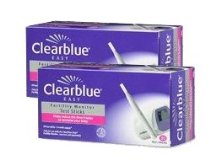
Fertility Monitors ...& So Much More!

Fertility Monitors ...& So Much More!
Get all your fertility -pregnancy supplies - and save $$$$! Just click the photo!

Cleanwell

Designer Jewelry - Outlet Prices !

Designer Jewelry - Outlet Prices !
Go on ....treat yourself! You deserve it! ( And you won't believe the prices! :)Just click the picture to visit CountryDutchess.com - your source for affordable gems and jewels!
Up to 80% off brand name skincare cosmetic
Showing posts with label folic acid and pregnancy. Show all posts

Tuesday, March 15, 2011

Halting Premature Birth: Conflict Over Common Treatments

Two new studies question the use of traditional methods for reducing premature birth. Here's what you need to know ....

By Colette Bouchez

Two popular treatments currently used individually to prevent pre-term labor – folic acid and progesterone – may not, in fact, stop early births as once believed. That’s the news according to two separate studies recently presented at the annual meeting of the Society For Maternal Fetal Medicine in San Francisco.

In the first study, a group of Norwegian researchers will present evidence that taking folic acid (the vitamin also known as B9) before and during pregnancy, does not protect against spontaneous, pre-term delivery as once thought.

Indeed, in earlier American studies research suggested that taking folic acid before and during pregnancy could reduce the incidence of pre-term labor by up to 70%. Because, however, the study group was comparatively small, doctors worldwide questioned whether or not these results could be duplicated in a larger study group.

In this new Norwegian study, researchers looked at the births of some 72,000 children. Using the criteria of singleton births with preterm delivery ranging from 22 to 36 weeks in otherwise normal pregnancies, they compared records from mothers who took folic acid supplements, or consumed foods high in folic acid, to those who did not. The information was gathered from questionnaires filled out by the mothers at weeks 17, 22 and 30, and the questions included not just the use of folic acid supplements, but also foods high in folic acid, such as enriched grain breads.

The result: There was no statistically significant difference in the rate of pre term birth among women in either gorup, regardless of the amount of either dietary or supplemental folic acid they consumed before or during pregnancy.

Indeed, the study, which to date is the most comprehensive of it’s kind, showed no protective effects of folate intake on pre term delivery.

That said, doctors continue to stress the importance of folic acid as a prenatal nutrient, particularly in regard to reducing the risk of neural tube defects, a brain development problem than can cause severe mental retardation and impair growth and development on all levels.

Study 2: Progesterone found unable to prevent pre-term birth in twins.

In at smaller, second study on premature birth aslo presented at today’s meeting, researcher C. Andrew Combs, M.D. will report that the use of the common pre-term labor hormone treatment known as 17-Hydroxyprogesterone does not, appear to reduce the rate of pre-term births among mothers carrying twins - a group most likely to be at risk for pre-term delivery.

In this small study carried out at 18 different locations, 160 mothers were randomized to receive either the natural progesterone treatment or a placebo with some beginning as early as the 20th week of their pregnancy. Normally, 17-Hydroxyprogesterone, which is manufactured by the mother’s adrenal glands, increases naturally during the third trimester of pregnancy, thus giving birth to the idea that supplements of this steroid hormone could play a role in preventing pre-term labor - an idea popular among many high risk obstetricians.

The study result: There was no statistically significant difference in the incidence of pre-term delivery or neo-natal death among the group of women taking the progesterone supplements, vs those who received a placebo treatment.

As such, the study authors conclude that the use of 17 –Hydroxyprogesterone is not an effective treatment in reducing the rate of pre-term birth in women carrying twins.

Ironically, however, also presented today at today’s conference was a March of Dimes award, given on behalf of research showing how natural progesterone works to prevent pre-term labor.

The award was presented to study author Errol R. Norwitz, M.D, Ph.D., OB/Gyn –in-Chief at Tufts Medical Center for his research on how certain proteins found in progesterone appear to prevent pre-term labor by affecting apoptosis – the normal, orderly death of cells that takes place in the fetal membranes. If the death of cells that make up the fetal membrane can be halted or slowed down, Dr. Norwitz contends that the membrane itself remains thicker and stronger, which, he says, may mean it is less likely to rupture prematurely causing a premature delivery. The research was supported in part by a March of Dimes grant.

While this study appears to be in obvous conflict with the findings also presented today by Dr. Combs, experts say one reason may be that women carrying twins could respond differently to progesterone supplements than women carrying singletons - or that perhaps larger doses may be needed to see an effect. It's also possible that the cause of premature birth in twins may be different from the cause of premature birth in singletons, and may require a different type of treatment.

What everyone seems to agree on however, is the need for more reearch in this area. Indeed, in joint statements issued as early as 2008 by both the American College of Obstetricians and Gynecologists and the Society for Maternal-Fetal Medicine, it was noted then that further studies were needed on the use of progesterone as a treatment for preterm labor before any solid conclusions can be drawn on it’s potential value.

They also stated that “based on current knowledge it is important to offer progesterone for pregnancy prolongation only to women with a documented history of a previous spontaneous birth at less than 37 weeks of gestation," which is a recommendation that many doctors continue to follow today.

According to the March of Dimes more than a half million babies are born prematurely in the United States each year, at an annual cost of some 26 billion dollars. More importantly, premature birth is the leading cause of newborn death, and babies who do survive a premature birth can sometimes face lifelong health challenges. Being born even just a few weeks early can result in higher rates of hospitalization and illness than babies born full-term. In the last few critical weeks of pregnancy many organs –including the brain – undergo important developmental changes, that might not occur if birth occurs too soon.

Continue reading more  on Examiner.com
Copyright by Colette Bouchez 2011 - All Rights Reserved.  Reprinted Courtesy of Examiner.com

Tuesday, December 28, 2010

Three Pre Natal Nutrients Shown to Make Babies Healthier And Smarter!

New evidence suggests that mothers who take 3 key nutrients before and during pregnancy may give birth to smarter, healthier babies!  Here’s what you need to know.

By Colette Bouchez

Want to give birth to a smarter baby?  Make sure to get  an adequate supply of the mineral iron and the nutrient folic acid (vitamin B9) before and during your pregnancy! 
That’s the exciting  result from a new study released today by researchers in Nepal India. Here doctors found that women who took  prenatal vitamins containing both iron and folic acid  before and during pregnancy gave birth to children with more highly developed cognitive skills, as well as better developed motor skills than the babies born to moms who skipped these important nutrients.
The children  whose mother’s took the vitamins also showed a higher, more developed level of reasoning skills and displayed an enhanced sense of behavioral skills including inhibitory controls,  when compared to babies whose mother’s did not have the benefit of these nutritional supplements.
While most women are aware of the importance of taking prenatal vitamins while they are pregnant, fertility experts like Dr. Niels Lauersen say too many still don’t realize the importance of also taking these vitamins before they even try to conceive.

“Many women are pregnant 6, 8 or even 10 weeks before they know it- a time when your baby is going through critical stages of development that could greatly benefit from many nutrients, but particularly folic acid,” says Lauersen,   co- author of the new book “ Green Fertility: Nature’s Secrets for Making Babies” 
So, says Lauersen,  taking a daily prenatal or high potency  vitamin beginning two months prior to when you want to conceive will help ensure that your baby’s nutritional needs are met from the moment of  conception. 
Iron supplements, say Lauersen are most critical towards the end of the pregnancy, as the baby’s blood supply begins to expand putting extra stress on the mother’s supply. 
The WHO (World Health Organization) estimates that up to one-half of all pregnant women in developing countries are anemic at the time during pregnancy due to a lack of iron. 

Vitamin D Helps Baby Breathe Better! 
If  you want to breathe easy about your baby’s ability to breathe,  make sure you get an adequate supply of Vitamin D during your pregnancy.  How can this help?
In a new study just published today in the journal Pediatrics,  a group of Harvard researchers found that  babies born with low levels of vitamin D in their bloodstream, were much more likely to develop wheezing problems, and were more susceptible to infant respiratory infections, including Bronchiolitis, a viral infection of the lungs,  that is the leading cause of hospitalization among infants. In the US.
Conversely, babies born with higher levels of Vitamin D appeared to gain protection against these common health problems.
The level of vitamin D in a baby’s bloodstream  is a direct reflection of the amount of Vitamin D in the mother’s bloodstream during gestation. And in a previous study these same researchers proved that the risk of infection was higher amongst babies born to mothers who did not have adequate levels of vitamin D during pregnancy.
In the new study the doctors directly examined the cord blood samples taken from 922 children in New Zealand, looking for their specific levels of vitamin D.  The researchers then followed the children for a period of  five years, periodically assessing their health via questionnaires filled out by their mothers.
The result: Researchers found the lower the level of vitamin D in each child’s cord blood sample, the higher their risk of developing wheezing problems during the first five years of life.  Those with exceptionally low levels of D were twice as likely to develop respiratory infections including colds, coughs and ear infections during the first three critical months of life.   Doctors reported that the D-deficient babies also experienced a greater risk of infections and illness overall, when compared to  babies with higher levels of D in their cord blood.
The one surprising finding in the study was that the lack of vitamin D and the increase in wheezing did not appear to correlate with a higher risk of asthma.
That said, according to the book Green Fertility: Nature’s Secrets for Making Babies, even if a lack of vitamin D does not increase your baby’s risk of asthma, making certain your levels remain high during pregnancy could ultimately help reduce the severity of any  asthma that does occur, simply   by reducing the  risk of respiratory conditions known to exacerbate the disease.
The body makes Vitamin D naturally via exposure to the sun - you'll need about 20 minutes a day without sunblock to reach minimum levels.  You will likely need vitamin D supplements to reach the maximum amount necessary to improve your baby's health. 
 For more information on the key vitamins, minerals and other micro-nutrients that can help you get pregnant as well as increase your baby’s health once you do conceive,  visit Green Fertility.com  or pick up a copy of Green Fertility: Nature’s Secrets for Making Babies.
 
Copyright by Colette Bouchez 2010 - All Rights Reserved. In addition to US Copyright, the text of this FERTILITY BLOG is licensed under a Creative Commons Attribution 3.0 License. All Formatting and style elements of this page are not available under this license and Colette Bouchez retains all rights in those elements. The creators and contributors to this blog may or may not benefit from the mention of any products or services featured in these posts.