
Eat - Love- GET PREGNANT! Discover the secrets!

Green Fertility: A Breath of Fresh Air for Couples TTC!

A Baby At Last! Discover the latest tests, treatments and natural ways to get pregnant fast!

Up to 70% Savings on Top Brands

Fertility Jewelry!

Fertility Jewelry!
Click the photo to discover the natural gemstones that legend says can influence fertility & help you get pregnant faster!

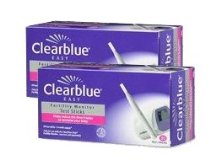
Fertility Monitors ...& So Much More!

Fertility Monitors ...& So Much More!
Get all your fertility -pregnancy supplies - and save $$$$! Just click the photo!

Cleanwell

Designer Jewelry - Outlet Prices !

Designer Jewelry - Outlet Prices !
Go on ....treat yourself! You deserve it! ( And you won't believe the prices! :)Just click the picture to visit CountryDutchess.com - your source for affordable gems and jewels!
Up to 80% off brand name skincare cosmetic

Wednesday, January 13, 2010

Sleep Like A Baby - And Have A Baby!

If trying to get pregnant is keeping you up nights, then you might want try putting your worries aside, and just kick back and get some rest! Experts say when it comes to conception, a good night's sleep might be just what the doctor ordered!


Sleep like a baby ...and have a baby! That's the premise behind some new research which suggests that getting a good nights sleep might be all many couples need to dramatically improve their fertility! Although the research is still considered somewhat new, more and more we are discovering the important role that sleep can play in promoting healthy ovulation and better conception odds. And the link, say experts, is the hormone leptin.
Although it's known for being an appetite and weight regulation hormone, researchers are also finding it appears to play a critical role in female fertility. Why? To begin with, leptin levels falls when we are sleep-deprived. Perhaps not coincidentally, researchers have now found that in some infertile women, leptin levels are low.
Moreover, a study conducted at Beth Israel Deaconess Medical Center showed that giving leptin injections twice a day for three months to female athletes who had stopped menstruation (and stopped producing and ovulating eggs) not only raised levels of this hormone but also helped ovulation kick in.
Can you do the same thing by simply getting more sleep? Experts say they aren't sure yet.
But what we do know is that if you are chronically sleep deprived you are likely to have some irregular cycles - and that in turn means ovulation is being affected.
Getting more sleep appears to help cycle regulation - which in turn will always increase your chances for getting pregnant.
One more tip: Sleep with the lights on! How can this help? Studies show that artificial light can help regulate menstrual cycles in some women. While doctors aren't certain why, we do know that exposure to light impacts the production of melatonin as well as other hormones, some of which appear to play a small but never the less influencing role in the production of reproductive hormones.
For more tips and information on getting pregnant fast, visit GettingPregnantNow.org. And for some super advice on the foods that help regulate ovulation and help you get pregnant faster visit FertilityDietGuide.com.

Copyright by GettingPregnantNow.org 201o- All Rights Reserved.
In addition to US Copyright, the text of this FERTILITY BLOG is licensed under a Creative Commons Attribution 3.0 License. All Formatting and style elements of this page are not available under this license and Colette Bouchez retains all rights in those elements.

Sunday, December 20, 2009

PCOS: Boost Fertility With Vitamin D

Research suggests that for many women, Vitamin D - the sunshine vitamin - may be the answer to getting pregnant faster and easier! Here's an expert opinion on the topic.

By Niels H. Lauersen, M.D., Ph.D.
Editorial Commentary


If you’ve been diagnosed with PCOSPoly Cystic Ovarian Syndrome – and you’re having a problem getting pregnant, the solution may be simpler than you think. Indeed, there is good evidence to suggest that you can boost your fertility and increase your chances for conception by a significant margin, if you simply increase your intake of Vitamin D.
How can this help you?
As you no doubt already know, PCOS is a condition that, while it affects ovulation, is really related to a condition known as insulin resistance - the body's inability to use insulin effectively enough to clear sugar from the blood. But insulin resistance is also the underlying cause of type 2 diabetes - and therein lies the link to vitamin D.
What’s the connection?

Over the past several years a number of important studies have emerged suggesting that vitamin D can help improve the body’s sensitivity to insulin in those with type 2 diabetes. In one study published recently in the American Journal of Clinical Nutrition, researchers found that among those folks who were vitamin D deficient, increasing supplement intake of this nutrient improved the body’s ability to use insulin by a whopping 60%.
This is dramatic, particularly when compared to the effects of Metformin, the drug currently prescribed to increase insulin sensitivity in type 2 diabetes as well as PCOS. In studies published in the New England Journal of Medicine, Metformin was only able to increase insulin sensitivity by about 13 percent - far below what was achieved in the vitamin D study.
Since the similarities between type 2 diabetes and PCOS are so striking, it makes sense that both groups would benefit equally from an increase in vitamin D.
Adding more proof to the theory: A group of Yale researchers found that out of 67 women who had problems getting pregnant, 93% were found to be vitamin D deficient. Not surprisingly, a good portion of the women they were studying also had PCOS.
According to researcher Dr Lubna Pal, “ Of note, not a single patient with either ovulatory disturbance or polycystic ovary syndrome demonstrated normal Vitamin D levels; 39 per cent of those with ovulatory disturbance and 38 per cent of those with PCOS had serum 25OH D levels [vitamin D] consistent with deficiency. “
In another study, women with PCOS who lost their menstrual cycle and were considered infertile, resumed their periods and became pregnant when vitamin D levels were increased!
All of this is particularly important in light of the fact that today most women are considered to be vitamin D deficient. Why?

One of the key ways the body makes vitamin D is via exposure to sunlight. Since we are all more cognizant of the risks of skin cancer, not only are we spending less time in the sun, but we're also more vigilant about applying sunscreen. That's good to reduce the risk of skin cancer, but in the process we also hamper our body's ability to manufacture vitamin D on a cellular level.

Combine this with a diet that is generally low in vitamin-D rich foods and it’s easy to see how a significant deficiency of this nutrient can develop – one that is not only likely to impact women with PCOS, but all women of childbearing age.
This is the reason I have long recommended that increasing levels of vitamin D is one way that all women, and particularly women with PCOS, can immediately improve their fertility profile and get pregnant faster.
How much vitamin D do you need to make a difference in your fertility? I routinely recommend 1,000 units of vitamin D daily in summer months (when there is more sun) and 2,000 units daily in winter months, when there is less sun exposure. Some research now suggests that 2,000 units or more daily is important to take year round - and I believe that for some women this may be the required amount.
If you are trying to get pregnant you should also add vitamin D rich foods to your daily diet, including fortified low fat milk, fortified orange juice, and fatty fish such as salmon or mackerel, tuna, sardines and herring. You can also find cereals fortified with vitamin D and some D-rich eggs. These foods should be eaten in addition to the supplements, in order to ensure you reach your full fertility potential.

Dr. Lauersen is the co-author of the new book "The New Fertility Diet Guide: Delicious Food Secrets To Help You Get Pregnant Faster." To learn more about how diet can help you get pregnant, visit : FertilityDietGuide.com.


Saturday, December 19, 2009

Acupuncture and Fertility: What You Should Know

By Colette Bouchez

If headlines are any indication of what's hot and what's not, it's easy to believe that infertility treatment is strictly a modern day science, made possible solely through the courtesy of high-tech medicine.

But as good as modern science is, many couples trying to get pregnant find themselves turning to an age-old treatment for help -- one so steeped in tradition it's about as far from life in the 21st century as one can get.

That treatment is acupuncture, and today, even high-tech reproductive specialists are looking to the somewhat mysterious world of Chinese medicine to help those fertility patients for whom western science alone is not quite enough.

"Most of our patients are referred to us by reproductive medicine specialists -- they are usually women who have failed one or usually more than one attempt at IVF (in vitro fertilization), and their doctor is looking for something to help implement the success of their treatment, over and above what the protocols alone can accomplish," says Raymond Chang, MD, the medical director of Meridian Medical and a classically trained acupuncturist as well as western-trained medical doctor.

Acupuncture is an ancient Chinese medicine treatment that relies on the painless but strategic placement of tiny needles into a "grid-like" pattern that spans the body, from head to toe. The needles are used to stimulate certain key "energy points" believed to regulate spiritual, mental, emotional, and physical balance. And, for many women, it's often just what the doctor ordered.


"For many women acupuncture will help enhance fertility treatments by helping the body to function more efficiently - it can also work to restore health to many systems in the body with sub-clinical imbalances - meaning, the problem may not necessarily show up on a test, but still it exists and may be interfering with fertility," says Dr. Niels Lauersen, author of
The New Fertility Diet Guide: Delicious Food Secrets To Help You Get Pregnant Faster."

Lauersen says it can also be a help to women undergoing IVF treatments. " There is some research to show that it can improve IVF outcomes in some women."

Indeed that is exactly what a group of German researchers found in a study of 160 women, published April 2002 in
the reproductive journal Fertility and Sterility. In their research, adding acupuncture to the traditional IVF treatment protocols substantially increased pregnancy success.

In this study one group of 80 patients received two, 25-minute acupuncture treatments -- one prior to having fertilized embryos transferred into their uterus, and one directly afterwards. The second group of 80, who also underwent embryo transfer, received no acupuncture treatments.

The result: While women in both groups got pregnant, the rate was significantly higher in the acupuncture group -- 34 pregnancies, compared with 21 in the women who received IVF alone.

But increasing the odds of IVF is not the only way acupuncture can help. Chang says it can also work to stimulate egg production in women who can't -- or don't want to -- use fertility medications to help them get pregnant.

"When you compare the pregnancy rates for an egg producing drug such as Clomid to acupuncture alone, the rates are equal -- a 50% chance of pregnancy in three months for general patients -- to those not undergoing IVF," says Chang.

Unfortunately, however, Chang says that because acupuncture generally stimulates the growth and release of just one egg, it can't be substituted for fertility drugs used in IVF, since they work to produce the multiple eggs necessary to achieve success with this treatment.

To read more about how acupuncture works to restore fertility click here.

For more helpful tips on how to encourage fertility naturally – and discover delicious foods that can help regulate hormones and help get your ovulation back on track, FertilityDietGuide.com.

Copyright by Colette Bouchez 2009 - All Rights Reserved.
In addition to US Copyright, the text of this FERTILITY BLOG is licensed under a Creative Commons Attribution 3.0 License. All Formatting and style elements of this page are not available under this license and Colette Bouchez retains all rights in those elements.